Hawaiʻi’s Endangered Species: What to Know and How to Protect Them
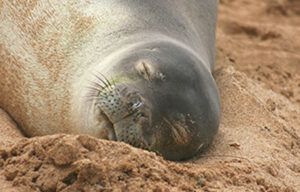
Hawaii • June 20, 2018

Much like its sprawling, verdant landscape, Hawaiʻi is also home to a variety of native animals on land and at sea that are unique to our islands. Of these fauna, so many find themselves on the long list of endangered species. We ask visitors and residents alike to do their part to protect and preserve these endangered species to allow generations in the future to enjoy their presence.

Hawaiian Monk Seal
The Hawaiian Monk Seal is endemic to Hawaiʻi, regarded as extremely rare not only in our state, but also in US waters. Their bodies are accustomed to life in warmer, tropical waters, and many females can be spotted by day lounging on sandy beaches near shallow waters when caring for their pups. Two-thirds of their time, however, is spent at sea. 
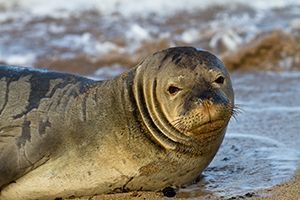
Monk Seal, Endangered, Beached Seal, Seal Cub
HTA / Pierce M Myers Photography

In ancient Hawaiian times, the Hawaiian Monk Seal was called ʻIlio Holo I Ka Uaua, or, “dog that runs in rough water.” Though surviving through generations of change in Hawaiʻi, the Hawaiian Monk Seal is declining at an alarming rate of four percent annually, with a population of fewer than 1,200 seals remaining.

NEVER bother a Hawaiian Monk Seal! Whether they are resting on the beach or heading back to sea, please keep your distance and remember that they are simply trying to live their lives in their marine home. 

Green Sea Turtle
Like the Hawaiian Monk Seal, Green Sea Turtles, or Honu in Hawaiian, are endangered animals that gravitate toward the sea. With a lifespan of 60-70 years and an impressive weight of anywhere from 200 to 500 pounds, Honu are incredible marine creatures that are found throughout the Hawaiian Islands. They can usually be spotted sleeping on the beach or swimming in Hawaiʻi’s waters.
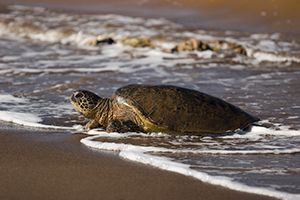
Turtle, Lanai Turtle, Turtle on Beach, Honu
HTA / Pierce M Myers Photography

The Honu has been listed as an endangered species since 1973, making it illegal to harass or capture this beloved creature. Be especially vigilant in the summer months, as this is sea turtle nesting season. 

Nēnē
The Nēnē is Hawaiʻi’s state bird, known for its black face and bill, partially webbed feet and low-pitched “nay-nay” call. Though once prevalent on all islands, the nēnē is now most commonly found on the Big Island, Maui and Kauaʻi. The months of August through April are known as breeding season for nēnē, and as such they are especially vulnerable to external threats. The public is asked to remain vigilant, especially when driving, as many birds are killed every year by speeding cars. 
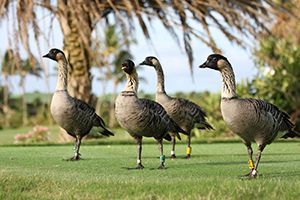
IHVB / Kirk Lee Aeder

The nēnē was listed as an endangered species in 1967, and since then the public has undertaken various efforts to recover and sustain this valuable breed while seeking to minimize its mortality rate when released into the wild.

All of these endangered species are protected by the Federal Endangered Species Act. As such, you MUST remain at least 100 feet away from them at all times! If you see any of these animals being harassed, please report the incident in detail to the NOAA Fisheries Office of Law Enforcement at (800) 853-1964.
 A person scuba diving next to a large school of fish in clear blue water, learn how to start scuba.
By Cheryl Lee January 21, 2026
Learn how to start scuba diving in Hawaii with clear steps, beginner essentials, top islands for training, safety tips, and what to expect on your first dives.
The peak of Mauna Kea on the big island of hawaii covered in snow
By Cheryl Lee January 19, 2026
It snows on Hawaii - and this post is here to break down the where, when, why, and how. Learn more about Hawaii’s snowfall and unique geography.
By Cheryl Lee January 16, 2026
Snorkeling in Hawaii is one of those experiences that stays with you long after you’ve dried off. The islands’ warm, clear waters are home to coral reefs teeming with tropical fish, sea turtles, and a variety of other marine life. Whether you’re a beginner testing out your first mask or a seasoned snorkeler chasing reef walls, Hawaii offers some of the best snorkeling conditions in the world. But before you grab your fins and jump in, it helps to understand what makes each island unique, how to snorkel safely, and how to protect the fragile ecosystems beneath the surface. Read our complete guide to making the most of snorkeling during your visit to the Hawaiian Islands.
1966 and 2026 This Week Hawaii magazine cover image
January 8, 2026
Discover the evolution of This Week Hawaii, from its 1966 founding to becoming Hawai‘i’s most widely read visitor magazine and digital travel resource.
Nene geese, what Hawaii  is known for.
By Cheryl Lee November 12, 2025
Discover what makes each Hawaiian Island unique, from Oahu’s surf culture to Kauai’s lush beauty and Maui’s luxury resorts. Learn more about what every Hawaiian island is about.
driving down a one way road on the coastline of hawaii with a view of the ocean and neighborhood
By Cheryl Lee October 27, 2025
Learn essential Hawaii driving etiquette and rules. From speed limits to local customs, here’s what you need to know for safe, respectful travel.
A kii statue in Puuhonua O Honaunau National Historical Park in Hawaii
By Cheryl Lee October 19, 2025
Looking to learn more about Hawaii’s history during your visit? This is our full guide to some of Hawaii’s best historical locations to visit during your stay!
Discover the best time to visit Hawaii.
By Cheryl Lee October 16, 2025
Plan your Hawaii trip smart! Learn the best months for sunny weather, fewer crowds, and good deals—plus insider tips from local island experts.
What Hawaiian Island Should You Visit? First-Timers Guide
By Cheryl Lee September 15, 2025
Planning your first Hawaii trip? Compare Oʻahu, Maui, Big Island & Kauaʻi in this guide to help you choose the best island for your perfect vacation.
By Cheryl Lee September 7, 2025
From farm-to-table fine dining and fresh island seafood to local shave ice and hidden roadside gems, Maui’s culinary scene offers something for every taste.